
Four-season foundation bed
An 8 m evergreen planting along the front of a house, with something in flower every month: rhododendron, dwarf Hinoki cypress, sweet box, hellebores and winter heath.
8.0 × 1.8 m footprint
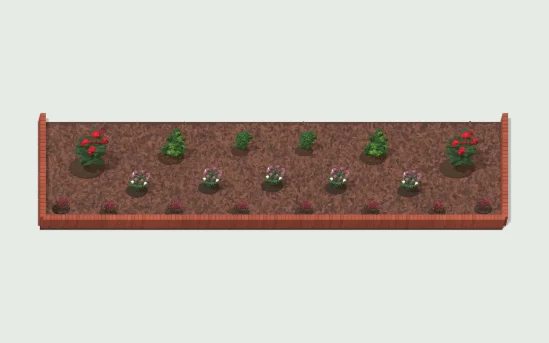
In this layout
7 products · 21 items
Select a product to highlight its items in 3D.
Plant choices
- Rhododendron 'Nova Zembla', #5 pot
- USDA zones 4-8 · Part shade · Moderate water once established · Flowers: mid to late spring
- Dwarf Hinoki cypress, #5 pot
- USDA zones 4-8 · Part shade · Moderate water once established
- Sweet box, #2 pot
- USDA zones 6-9 · Full shade · Moderate water once established · Flowers: winter (january–february)
- Lenten rose (hellebore), #2 pot
- USDA zones 4-9 · Part shade · Moderate water once established · Flowers: late winter to early spring
- Winter heath 'Kramer's Red', #1 pot
- USDA zones 6-8 · Full sun · Low water once established · Flowers: winter to early spring
Growing zones describe winter cold. A matching zone is a useful starting point. Sun, soil and water matter too.
Product information
7 products
From each product’s own information, shown once however many are used.
New garden bed, prepared and mulched14.4 m²
Care
First weeks
This prepared bed is soil finished with bark mulch; plants/edging are separate. Check grades and leave existing crowns, root flares and house clearances open. Pull mulch aside before planting and set each plant at its proper soil level, not into mulch.
Ongoing
Keep mulch in the bed, remove confirmed small weeds and check soil moisture below before watering. Do not dig woody material into roots to tidy it: this is surface cover, not fertilizer or potting mix. Irrigation must reach soil; damp mulch does not prove roots received water.
Seasons
After storms, rake displaced surface material back without burying crowns or drains. Measure what remains before topping up; repeating the full quoted depth builds a mound. Replace only thinning/decomposed coverage with planned material, maintaining plant/building clearances.
What's normal
Fading, settling, decomposition, fungi and variable bark/chip texture are expected. These alone are not defects. Weeding remains necessary, especially for established perennial weeds; mulch does not make a bed weed-free. Keep new weed seedlings from rooting deeply in decomposing material.
When to call
Call for washout, sour saturated material, ponding, buried crowns or plant decline. Check moisture/drainage before fertilizer or pesticide. Keep children/pets from eating fungi/unfamiliar material, and do not assume visible mushrooms require chemicals.
Confirm
Confirm soil blend/depth, bark layer, drainage and future planting plan. Plants added later need their own care; an empty prepared bed does not require automatic plant irrigation/fertilizer. Avoid changing grades near building drainage or tree roots without the installer's assessment.
Brick soldier edging11.6 m
Care
First weeks
Brick soldier edging defines a bed/lawn boundary. Confirm exposed height, joints and stakes/bedding at handover. It is not a step, guard or retaining wall. Learn its position before mowing and keep children clear of sharp or broken sections.
Ongoing
Sweep soil/leaves off clay brick and joints. Test a brick-compatible mild cleaner and rinse without scouring bedding away. Avoid acids, wire brushes and forceful jets. Keep grass/roots from hiding or pushing the soldier course.
Seasons
After frost, rain and gardening, look for heaving, separated joins, loose supports or new trip edges. Return only loose mulch to its bed, leaving installed supports undisturbed. Keep mower wheels/blades clear at all seasonal cutting heights.
What's normal
Clay-brick colour varies and white mineral deposits can occur. A rocking, split or protruding brick needs repair; it is not simply a rustic feature.
When to call
Call for loose supports, recurring frost movement, broken sections or sharp/tripping edges. Isolate the hazard; never hammer blindly where services or irrigation may be buried. Have bedding/stakes corrected rather than raising soil around a failed section.
Confirm
Confirm frost-suitable brick, bedding/joint fill and spare pieces. Select sealing or stain removal for the actual clay brick; dirt alone does not justify masonry acid. Avoid driving over a soldier course unless specifically designed for it.
Rhododendron 'Nova Zembla', #5 potRhododendron 'Nova Zembla'2
Care
First weeks
Check the original rootball and nearby soil several centimetres down, especially in warm or windy weather. Rain or damp mulch can hide dry roots. Water slowly at soil level when it is drying, soaking the roots and surrounding soil, then allow drainage. Adjust to weather, drainage and current local watering rules; never leave roots standing in water. This broad-leaved rhododendron has shallow roots and needs steady moisture while it establishes; shelter it from hot afternoon sun.
Ongoing
Keep loose organic mulch over the roots, clear of stems and crowns, and hand weed without damaging shallow roots. Use an acidic, humus-rich but draining bed. Avoid lime, deep cultivation or burying the root collar. Summer irrigation may still be needed on an established plant in drought; verify soil moisture rather than responding to leaf position alone. Do not feed a stressed shrub without checking pH and roots.
Seasons
Remove faded flower trusses carefully if desired, preserving the small new shoots below them. Shape lightly just after flowering so next year's buds can develop; do not shear in autumn. In wet-winter climates reduce water with rain and keep the base free of packed wet mulch.
What's normal
'Nova Zembla' carries red spring trusses. Leaves may curl and droop temporarily in freezing weather, then relax as temperatures rise. A few old interior leaves yellow and shed naturally.
When to call
Call for rapid whole-plant wilt, blackened bases, repeated bud death or persistent yellow leaves with green veins. Check drainage and soil acidity before adding fertilizer or more water. All parts are harmful if eaten; keep clippings from children, pets and livestock.
Confirm
Confirm the installed variety, local winter suitability, drainage, irrigation settings and the installer's establishment plan at handover. Confirm the cultivar, soil acidity and protected summer exposure. Plan any major size reduction with the installer rather than assuming every old branch will regenerate.
Dwarf Hinoki cypress, #5 potChamaecyparis obtusa 'Nana Gracilis'2
Care
First weeks
Check the original rootball and nearby soil several centimetres below the surface, especially in warm or windy weather; rain or a wet surface can hide a dry rootball. Water slowly at soil level when it is drying, soaking the roots and surrounding soil, then allow drainage. Adjust to actual moisture and local watering rules; never leave roots standing in water. Slow growth does not mean low establishment water. Check beneath the dense branches and wet the rootball evenly without ponding.
Ongoing
Keep a loose mulch over the root area, clear of stems, and weed by hand rather than digging through shallow roots. Provide moist but well-drained soil in sun or part shade, protected from severe drying conditions. Keep air around the base and avoid rich feeding to force speed. The natural shell-like sprays need room; outer green foliage supports recovery.
Seasons
Usually leave 'Nana Gracilis' untrimmed. If correction is essential, shorten only a little green growth and remove dead material carefully. Do not cut into leafless brown wood or top the plant; dormant bare branches generally do not refill. Check winter drainage and soil moisture before forecast cold in dry weather.
What's normal
It is slow-growing with irregular layered fans; a few older shaded interior sprays may turn brown. A garden-size estimate is not a promise that growth stops at a particular height.
When to call
Call for browning that starts at shoot tips and spreads, a completely brown side, a loose base or persistent decline in wet soil. Record irrigation and exposure; browning from drought, roots and disease needs different responses.
Confirm
Confirm the installed variety, local winter suitability, soil drainage, irrigation settings and the installer's establishment plan at handover. Confirm the dwarf cultivar and eventual room for its form. Agree any staking review and keep irrigation emitters accessible beneath the branches.
Sweet box, #2 potSarcococca confusa2
Care
First weeks
Check the original rootball and nearby soil several centimetres down, especially in warm or windy weather. Rain or damp mulch can hide dry roots. Water slowly at soil level when it is drying, soaking the roots and surrounding soil, then allow drainage. Adjust to weather, drainage and current local watering rules; never leave roots standing in water. Sweet box is often placed in dry shade under eaves or trees; check that water actually reaches its new rootball.
Ongoing
Keep loose organic mulch over the roots, clear of stems and crowns, and hand weed without damaging shallow roots. Provide shade/partial shade and humus-rich, moist but draining soil. Established plants can tolerate some dryness, but young ones need reliable moisture and hot sun can scorch leaves. Avoid deep digging around roots and piling mulch against stems.
Seasons
Little pruning is needed. If clearance or shaping is necessary, trim lightly after the winter flower display, selectively removing dead or awkward shoots. Keep the natural branching rather than hard shearing just before flowering. Check summer moisture beneath dense evergreen cover and reduce irrigation when seasonal rain supplies the soil.
What's normal
Tiny white winter flowers may be noticeable by scent before appearance. Black berries can follow, and some old leaves naturally shed while the shrub remains green. Slow early growth is not necessarily a problem.
When to call
Ask for advice on widespread pale leaves, repeated scorch in shade, soft bases or persistent wilt after soil moisture has been checked. Do not treat ornamental berries as food or leave clippings where children or pets may chew them.
Confirm
Confirm the installed variety, local winter suitability, drainage, irrigation settings and the installer's establishment plan at handover. Confirm Sarcococca confusa, shade exposure and eventual space near the entry/path. The scent can be strong close to a doorway, so agree the location and any clearance trimming.
Lenten rose (hellebore), #2 potHelleborus × hybridus5
Care
First weeks
Check the original rootball and nearby soil several centimetres down, especially during warm or windy weather. Rain or damp mulch can conceal dry roots. Water slowly at soil level when it is drying, soaking the roots and surrounding soil, then allow drainage. Adjust to weather, drainage and current local watering rules; do not leave roots standing in water. Keep the new hellebore evenly moist while it settles; do not bury its crown in fresh compost or mulch.
Ongoing
Keep loose mulch over the roots, clear of stems and crowns, and hand weed without digging into shallow roots. Provide sheltered partial shade and fertile but freely draining soil. Established Lenten roses tolerate some summer dryness in shade, but check young plants and prolonged drought. Avoid repeated transplanting or routine division; clumps are best left undisturbed.
Seasons
In late winter, selectively remove old, spotted or flattened leaves as flower stems emerge, taking care not to cut buds. Clear diseased material rather than leaving it against the crown. Remove spent flower stems before seed ripens if seedlings are unwanted, leaving healthy new leaves to grow.
What's normal
Flowers can nod and remain attractive as their colours fade to green. Evergreen or partly evergreen leaves are replaced gradually. Winter flowering varies with weather; seed-grown hybrids may differ in flower colour.
When to call
Ask for diagnosis of severe distorted black-streaked growth, spreading crown rot or repeated failure to produce healthy leaves. All parts are harmful if eaten and sap may irritate skin; wear gloves and keep prunings from children and pets.
Confirm
Confirm the installed variety, local winter suitability, drainage, irrigation settings and the installer's establishment plan at handover. Confirm that these are Helleborus x hybridus and not a different hellebore with another flowering cycle. Agree whether seedlings are welcome and whether old-leaf removal is part of seasonal maintenance.
Winter heath 'Kramer's Red', #1 potErica × darleyensis 'Kramer's Red'8
Care
First weeks
Check the original rootball and nearby soil several centimetres down, especially in warm or windy weather. Rain or damp mulch can hide dry roots. Water slowly at soil level when it is drying, soaking the roots and surrounding soil, then allow drainage. Adjust to weather, drainage and current local watering rules; never leave roots standing in water. Keep the small heath rootball evenly moist as it establishes, especially if it was installed while flowering in cool weather.
Ongoing
Give sun and acidic to neutral, well-drained soil. Established plants tolerate some dryness but need checks in extended drought. Avoid burying the leafy base, heavy feeding or waterlogged winter soil. Hand weed carefully around the fine shallow roots.
Seasons
Immediately after the winter/early-spring flowering finishes, trim off spent flowers with only a little leafy growth to keep a compact mound. Always leave living foliage below cuts: do not renovate by cutting into bare brown wood. Avoid autumn shearing, which removes developing flower buds.
What's normal
Bronze winter foliage and flowers through cooler months are characteristic. Individual spent flowers naturally dry brown; a little old inner foliage also ages. 'Kramer's Red' is also listed as 'Kramer's Rote'.
When to call
Call for expanding brown patches, whole shoots dying or a base that remains wet and soft. Check both drainage and drought before applying products. An old bare-centred plant may need gradual replacement rather than severe cutting.
Confirm
Confirm the installed variety, local winter suitability, drainage, irrigation settings and the installer's establishment plan at handover. Confirm Erica x darleyensis 'Kramer's Rote'/'Kramer's Red', actual soil conditions and the post-bloom trim timing. Do not confuse its winter flowering cycle with summer-flowering heather and apply the wrong pruning season.