
Rain garden
A planted basin that catches roof or driveway runoff, with red osier dogwood and ninebark in the wet centre, deer and sword fern on the slopes and kinnikinnick on the rim.
5.6 × 3.5 m footprint
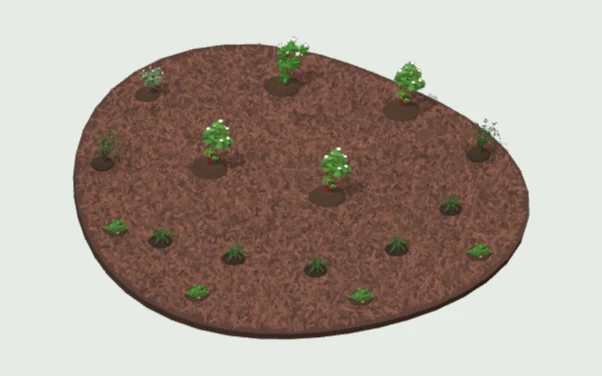
In this layout
7 products · 17 items
Select a product to highlight its items in 3D.
Plant choices
- Red osier dogwood, #2 pot
- USDA zones 2-8 · Full sun · High water once established · Flowers: late spring
- Pacific ninebark, #2 pot
- USDA zones 5-9 · Part shade · High water once established · Flowers: late spring to early summer
- Deer fern, #1 pot
- USDA zones 5-9 · Full shade · High water once established
- Western sword fern, #2 pot
- USDA zones 5-9 · Full shade · Moderate water once established
- Common snowberry, #1 pot
- USDA zones 3-9 · Part shade · Low water once established · Flowers: late spring to summer (small pink flowers)
- Kinnikinnick 'Vancouver Jade', #1 pot
- USDA zones 2-8 · Full sun · Low water once established · Flowers: spring
Growing zones describe winter cold. A matching zone is a useful starting point. Sun, soil and water matter too.
Product information
7 products
From each product’s own information, shown once however many are used.
New garden bed, prepared and mulched15.26 m²
Care
First weeks
This prepared bed is soil finished with bark mulch; plants/edging are separate. Check grades and leave existing crowns, root flares and house clearances open. Pull mulch aside before planting and set each plant at its proper soil level, not into mulch.
Ongoing
Keep mulch in the bed, remove confirmed small weeds and check soil moisture below before watering. Do not dig woody material into roots to tidy it: this is surface cover, not fertilizer or potting mix. Irrigation must reach soil; damp mulch does not prove roots received water.
Seasons
After storms, rake displaced surface material back without burying crowns or drains. Measure what remains before topping up; repeating the full quoted depth builds a mound. Replace only thinning/decomposed coverage with planned material, maintaining plant/building clearances.
What's normal
Fading, settling, decomposition, fungi and variable bark/chip texture are expected. These alone are not defects. Weeding remains necessary, especially for established perennial weeds; mulch does not make a bed weed-free. Keep new weed seedlings from rooting deeply in decomposing material.
When to call
Call for washout, sour saturated material, ponding, buried crowns or plant decline. Check moisture/drainage before fertilizer or pesticide. Keep children/pets from eating fungi/unfamiliar material, and do not assume visible mushrooms require chemicals.
Confirm
Confirm soil blend/depth, bark layer, drainage and future planting plan. Plants added later need their own care; an empty prepared bed does not require automatic plant irrigation/fertilizer. Avoid changing grades near building drainage or tree roots without the installer's assessment.
Red osier dogwood, #2 potCornus sericea3
Care
First weeks
Check the original rootball and nearby soil several centimetres down, especially in warm or windy weather. Rain or damp mulch can hide dry roots. Water slowly at soil level when it is drying, soaking the roots and surrounding soil, then allow drainage. Adjust to weather, drainage and current local watering rules; never leave roots standing in water. Red osier dogwood likes moisture, but a new rootball still needs checking in a wet bed rather than being left in stagnant water.
Ongoing
Keep loose organic mulch over the roots, clear of stems and crowns, and hand weed without damaging shallow roots. Provide sun or partial shade and reliable summer moisture. It tolerates seasonal wetness and some heavier soil, but irrigation should follow actual root-zone conditions. Allow for suckering and rooting stems, controlling the boundary before a colony crowds neighbouring plants.
Seasons
The brightest red colour is on young stems. In late winter/early spring, an established shrub can have a few oldest stems removed at the base for renewal. Cutting all stems down produces a strong colour display but sacrifices that season's flowers/fruit and should be an agreed choice; do not routinely coppice a new weak plant.
What's normal
Winter leaf fall exposes the red stems. Older bark becomes duller; that is normal ageing. White flowers and fruit, suckers and autumn colour are expected seasonal features.
When to call
Call for widespread stem lesions, persistent wilt, major cane dieback or roots staying stagnant. Some leaf spots can be cosmetic; moisture, airflow and pruning need review before products are applied.
Confirm
Confirm the installed variety, local winter suitability, drainage, irrigation settings and the installer's establishment plan at handover. Confirm Cornus sericea and whether the priority is winter stem colour, wildlife flowers/fruit or a natural thicket. Agree eventual spread and a renewal cycle rather than a default annual hard cut.
Pacific ninebark, #2 potPhysocarpus capitatus1
Care
First weeks
Check the original rootball and nearby soil several centimetres down, especially during warm or windy weather. Rain or damp mulch can conceal dry roots. Water slowly at soil level when it is drying, soaking the roots and surrounding soil, then allow drainage. Adjust to weather, drainage and current local watering rules; do not leave roots standing in water. New Pacific ninebark needs consistent rootball moisture even in a damp site; check that the planting hole drains rather than remaining a stagnant sump.
Ongoing
Keep loose mulch over the roots, clear of stems and crowns, and hand weed without digging into shallow roots. Provide sun or partial shade and space for a large arching shrub. It tolerates a range of soils and some seasonal wetness; in a dry site, water through prolonged drought as needed. Avoid heavy feeding or trying to contain it by frequent tight shearing.
Seasons
Flowers are carried on older growth. If thinning is needed, prune after flowering, taking a few old canes near ground level and retaining younger ones. Hard renewal sacrifices flowers and should be an agreed maintenance choice rather than an annual default. Remove unwanted seedlings or suckers at bed edges.
What's normal
Peeling strips of bark on older stems give ninebark its name. Winter leaf fall and a loose, multi-stemmed form are normal. Flowering may be lighter with heavy shade or inappropriate pruning.
When to call
Ask for advice about large areas of cane death, basal rot, severe mildew or repeated wilt. A little bark peeling alone is normal; dark sunken lesions with dieback need a closer look. Check soil before increasing irrigation.
Confirm
Confirm the installed variety, local winter suitability, drainage, irrigation settings and the installer's establishment plan at handover. Confirm Physocarpus capitatus rather than an ornamental ninebark cultivar with different size/colour and agree mature clearance. Check nesting before working inside a dense shrub.
Deer fern, #1 potBlechnum spicant5
Care
First weeks
Check the original rootball and nearby soil several centimetres below the surface, especially in warm or windy weather; rain or a wet surface can hide a dry rootball. Water slowly at soil level when it is drying, soaking the roots and surrounding soil, then allow drainage. Adjust to actual moisture and local watering rules; never leave roots standing in water. Deer fern needs a reliably moist root zone while it establishes; shade beneath trees can be very dry even after rain.
Ongoing
Keep a loose mulch over the root area, clear of stems, and weed by hand rather than digging through shallow roots. Keep in sheltered shade or part shade, with humus-rich, moist but draining soil. Do not let the small rootball bake dry, and do not fill the crown with mulch or compost. Established deer fern usually needs more moisture than drought-tolerant sword fern.
Seasons
Remove only brown, damaged fronds close to the base before spring growth expands. Avoid cutting emerging curled fronds or shearing off all living leaves. Reassess moisture during dry summers and after changes to overhead tree cover; reduce irrigation when winter rainfall keeps roots moist.
What's normal
Low spreading sterile fronds and narrower upright fertile fronds have different shapes. Brown spore structures beneath fertile fronds are reproductive features, not pests. A few old fronds naturally age.
When to call
Ask for help if the crown becomes soft, all fronds suddenly wilt or new growth repeatedly scorches. Inspect soil before watering: dry shade and oxygen-starved wet soil can both cause decline.
Confirm
Confirm the installed variety, local winter suitability, soil drainage, irrigation settings and the installer's establishment plan at handover. Confirm shade through summer, competition from tree roots and how irrigation reaches the fern rather than only the surface mulch. Do not assume the existing 'high water' tag means saturated ground.
Western sword fern, #2 potPolystichum munitum2
Care
First weeks
Check the original rootball and nearby soil several centimetres down, especially in warm or windy weather. Rain or damp mulch can hide dry roots. Water slowly at soil level when it is drying, soaking the roots and surrounding soil, then allow drainage. Adjust to weather, drainage and current local watering rules; never leave roots standing in water. A newly planted sword fern needs regular checks even though a mature clump can tolerate dry shade. Tree roots and overhead cover can limit rainfall.
Ongoing
Keep loose organic mulch over the roots, clear of stems and crowns, and hand weed without damaging shallow roots. Provide partial/full shade and humus-rich, well-drained soil. Mature plants tolerate some dryness, but water through prolonged drought if fronds and root moisture indicate need. Avoid burying the crown, constantly saturated soil or sudden exposure to hot afternoon sun.
Seasons
Remove old brown or damaged fronds selectively in late winter/early spring before new fiddleheads expand. Cut near the base without damaging the central crown or emerging shoots; full annual removal of healthy foliage is not required. Keep leaf litter loose so it does not smother new growth.
What's normal
Brown spore patches in orderly rows beneath fronds are normal reproductive structures. A few older fronds naturally brown; new upright fronds gradually arch outward. Growth and ultimate size depend on site moisture and shade.
When to call
Call for a soft or rotten crown, sudden collapse of all fronds or repeated failure of new shoots. Some old frond damage after wind or cold is cosmetic. Check dry tree-root competition and drainage before simply watering more.
Confirm
Confirm the installed variety, local winter suitability, drainage, irrigation settings and the installer's establishment plan at handover. Confirm Polystichum munitum, summer shade, mature clearance and who will remove old fronds. A #2 pot describes nursery size; it does not mean the plant is already established or can immediately tolerate dry shade.
Common snowberry, #1 potSymphoricarpos albus1
Care
First weeks
Check the original rootball and nearby soil several centimetres below the surface, especially in warm or windy weather; rain or a wet surface can hide a dry rootball. Water slowly at soil level when it is drying, soaking the roots and surrounding soil, then allow drainage. Adjust to actual moisture and local watering rules; never leave roots standing in water. Water new snowberry while roots establish; shade tolerance and later drought resistance do not remove that need.
Ongoing
Keep a loose mulch over the root area, clear of stems, and weed by hand rather than digging through shallow roots. Established snowberry tolerates a broad range of conditions, but avoid continuously waterlogged soil. Allow for suckering; remove unwanted young shoots at the edge rather than letting a colony overrun small neighbouring plants.
Seasons
For a natural wildlife shrub, remove only dead or crowded stems. If renewal is needed, thin some older stems near ground level in late winter/early spring, retaining the rest. Heavy annual shearing reduces a graceful form and may reduce the berry display. Leave fruiting stems where they can be enjoyed safely.
What's normal
Bare stems in winter are normal, and white berries often remain after leaves fall. New stems arising outside the original clump are expected growth, not seedlings that must always be kept.
When to call
Call for repeated complete defoliation, cankers or expanding dead patches. Berries are not food for people or pets and can cause stomach upset if swallowed; keep young children from picking them and remove prunings from play areas.
Confirm
Confirm the installed variety, local winter suitability, soil drainage, irrigation settings and the installer's establishment plan at handover. Agree the maximum colony size, whether suckers may naturalize and how berry-bearing stems fit around children's routes. Check nesting activity before pruning a dense thicket.
Kinnikinnick 'Vancouver Jade', #1 potArctostaphylos uva-ursi 'Vancouver Jade'4
Care
First weeks
Check the original rootball and nearby soil several centimetres down, especially during warm or windy weather. Rain or damp mulch can conceal dry roots. Water slowly at soil level when it is drying, soaking the roots and surrounding soil, then allow drainage. Adjust to weather, drainage and current local watering rules; do not leave roots standing in water. Keep small kinnikinnick rootballs from drying completely until runners root into surrounding soil; established low water needs do not apply immediately.
Ongoing
Provide sun or light shade and lean, acidic, free-draining soil. Once rooted, this groundcover tolerates dryness; avoid rich feeding, continually wet soil and frequent overhead irrigation. Keep mulch away from the woody bases and hand weed until cover closes.
Seasons
Clip stray leafy tips or trim bed edges lightly after flowering if needed. Avoid cutting a whole mat back to bare old stems, and do not bury spreading stems under repeated heavy mulch. Remove individual dead branches and reassess drainage rather than automatically increasing irrigation.
What's normal
Slow initial spread, glossy leaves and bronze/red winter tones are normal. Pinkish spring flowers and red fruit are seasonal features. 'Vancouver Jade' forms a low spreading mat rather than an upright shrub.
When to call
Call for expanding dead patches, blackened stem bases or roots remaining wet through mild weather. Do not treat ornamental berries as a food recommendation. Check the identity of anything harvested and keep pets from chewing landscape plants.
Confirm
Confirm the installed variety, local winter suitability, drainage, irrigation settings and the installer's establishment plan at handover. Confirm the 'Vancouver Jade' label, soil acidity and intended mat boundary. Species-level guidance applies, but exact growth rate and winter appearance may differ with nursery stock and site.