
Mediterranean gravel garden
A drought-tolerant island of rosemary, lavender, blue fescue and a purple smoke bush, planted through pea gravel instead of bark.
6.0 × 3.4 m footprint
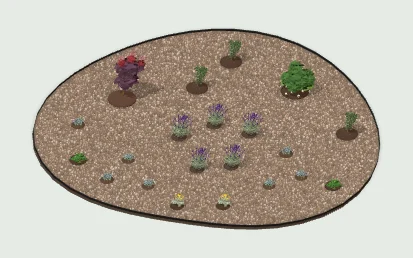
In this layout
9 products · 23 items
Select a product to highlight its items in 3D.
Plant choices
- Smoke bush 'Royal Purple', #5 pot
- USDA zones 4-8 · Full sun · Low water once established · Flowers: early summer (smoky plumes)
- Mexican orange blossom, #3 pot
- USDA zones 7-9 · Full sun · Low water once established · Flowers: spring, often again in fall
- Rosemary 'Tuscan Blue', #2 pot
- USDA zones 7-10 · Full sun · Low water once established · Flowers: late winter to spring
- Hidcote English lavender, 1 gallon
- USDA zones USDA 5-8 · Full sun · Moderate water once established · Flowers: summer
- Blue fescue 'Elijah Blue', #1 pot
- USDA zones 4-8 · Full sun · Low water once established · Flowers: early summer
- Kinnikinnick 'Vancouver Jade', #1 pot
- USDA zones 2-8 · Full sun · Low water once established · Flowers: spring
- Oregon sunshine, #1 pot
- USDA zones 5-9 · Full sun · Low water once established · Flowers: late spring to midsummer
Growing zones describe winter cold. A matching zone is a useful starting point. Sun, soil and water matter too.
Product information
9 products
From each product’s own information, shown once however many are used.
Pea gravel, 3 in15.83 m²
Care
First weeks
This is loose rounded pea gravel over fabric and a compacted base. Confirm edging and intended use: round stone moves underfoot and may not suit every mobility aid or busy route. It is not a compacted driveway surface.
Ongoing
Remove leaves before they decompose and carefully pull small weeds. Keep gravel out of lawns, drains and door tracks. Return lightly displaced stone without digging into base/fabric. Avoid jets or blower settings that scatter stones toward people, glazing or vehicles.
Seasons
After heavy rain, check channels, washout, puddles and lost edge support. Clear visible drain inlets without altering grades. Keep snow tools above loose stone and retrieve displaced pieces before mowing. Replenish with matching material rather than covering recurring drainage faults.
What's normal
Pea gravel shifts and shows footprints; some dust and load-to-load variation is common. Exposed fabric, persistent sinking, escaping stones or unsafe footing needs correction rather than a deeper loose layer.
When to call
Call for recurring holes, washout, ponding or separating edges. Keep clear of undermined ground. Do not excavate near buried utilities or regrade runoff toward buildings, neighbours or roads; obtain assessment before machinery work.
Confirm
Confirm gravel size/depth, fabric, edging and maintenance access, plus a stable alternative route if needed. Cement, sealant or a different gravel blend changes how the path moves and drains: do not add without approval.
Steel landscape edging, 4 in15.06 m
Care
First weeks
Steel landscape edging, 4 in defines a bed/lawn boundary. Confirm exposed height, joints and stakes/bedding at handover. It is not a step, guard or retaining wall. Learn its position before mowing and keep children clear of sharp or broken sections.
Ongoing
Brush debris away and keep soil/grass from hiding the top/stakes. Clean with water and a material/finish-compatible mild cleaner if needed. Avoid solvents, heat tools and impacts from mower blades/wheels or powered trimmers.
Seasons
After frost, rain and gardening, look for heaving, separated joins, loose supports or new trip edges. Return only loose mulch to its bed, leaving installed supports undisturbed. Keep mower wheels/blades clear at all seasonal cutting heights.
What's normal
Marks on powder-coated steel may expose it to corrosion. Protruding stakes, sharp edges, new lean or spreading rust need attention; this is coated steel, not intentional weathering steel.
When to call
Call for loose supports, recurring frost movement, broken sections or sharp/tripping edges. Isolate the hazard; never hammer blindly where services or irrigation may be buried. Have bedding/stakes corrected rather than raising soil around a failed section.
Confirm
Confirm coating/touch-up system, stake layout and safe top profile. Inspect before mowing; do not grind protection off or substitute a bare sharp strip. The steel specification reference is a material example, not proof of the installed brand.
Smoke bush 'Royal Purple', #5 potCotinus coggygria 'Royal Purple'1
Care
First weeks
Check the original rootball and nearby soil several centimetres down, especially in warm or windy weather. Rain or damp mulch can hide dry roots. Water slowly at soil level when it is drying, soaking the roots and surrounding soil, then allow drainage. Adjust to weather, drainage and current local watering rules; never leave roots standing in water. Keep a new smoke bush moist while it roots into surrounding soil; mature drought tolerance develops gradually.
Ongoing
Keep loose organic mulch over the roots, clear of stems and crowns, and hand weed without damaging shallow roots. Provide sun for strongest purple foliage and a well-drained root zone. Once established it tolerates dry conditions, with extra water as needed in exceptional drought. Avoid heavy feeding and routinely saturated soil.
Seasons
Choose the objective before pruning. For smoky flower plumes, prune lightly and retain older flowering wood. Hard pruning in late winter/early spring can produce large colourful leaves but sacrifices much or all of that year's smoke; it is an optional technique for established plants, not a required annual cut. Wear gloves when handling sap.
What's normal
Summer flower stalks develop the hazy 'smoke'. Purple leaves may become greener in shade and change colour before winter leaf fall. A year without plumes can follow heavy pruning rather than poor plant health.
When to call
Call for sudden wilt on one side, blackened stem tissue or progressive branch death. Cotinus can have wilt disease; avoid moving suspect soil or making major cuts without advice. Sap may irritate sensitive skin; keep prunings away from pets and children.
Confirm
Confirm the installed variety, local winter suitability, drainage, irrigation settings and the installer's establishment plan at handover. Confirm 'Royal Purple', mature size and whether the planting is intended for flowers, large foliage or a natural tree-like form. Agree one pruning approach rather than alternating severe cuts and expecting reliable plumes.
Mexican orange blossom, #3 potChoisya ternata1
Care
First weeks
Check the original rootball and nearby soil several centimetres down, especially during warm or windy weather. Rain or damp mulch can conceal dry roots. Water slowly at soil level when it is drying, soaking the roots and surrounding soil, then allow drainage. Adjust to weather, drainage and current local watering rules; do not leave roots standing in water. Protect the new Mexican orange blossom from drying wind while roots establish; a sheltered evergreen still needs summer moisture.
Ongoing
Keep loose mulch over the roots, clear of stems and crowns, and hand weed without digging into shallow roots. Use sun or partial shade and well-drained soil. Once well rooted it can tolerate short dry spells, but prolonged drought and reflected heat may cause leaf damage. Avoid excess feeding, standing water or burying the woody base.
Seasons
If shaping is needed, trim after the main spring flower display; light cutting then can encourage further growth and sometimes another flush. Remove damaged shoots after winter injury is clear. Avoid heavy late-autumn pruning that exposes soft regrowth to frost, and retain its natural rounded habit.
What's normal
Flowers may repeat in late summer under favourable conditions, but a second display is not guaranteed. Leaf scent when brushed and occasional old-leaf shedding are normal; cold may mark exposed tips.
When to call
Ask for help with persistent yellow foliage, widespread blackened shoots, repeated wilt in moist soil or whole sections dying after winter. Check both drainage and dryness before treating. A sheltered position may need reassessment if frost damage repeats.
Confirm
Confirm the installed variety, local winter suitability, drainage, irrigation settings and the installer's establishment plan at handover. Confirm the straight species or any cultivar, summer exposure, mature clearance and the timing of any shaping. Do not assume the word 'orange' means it produces an edible citrus crop.
Rosemary 'Tuscan Blue', #2 potSalvia rosmarinus 'Tuscan Blue'3
Care
First weeks
Check the original rootball and nearby soil several centimetres down, especially in warm or windy weather. Rain or damp mulch can hide dry roots. Water slowly at soil level when it is drying, soaking the roots and surrounding soil, then allow drainage. Adjust to weather, drainage and current local watering rules; never leave roots standing in water. New rosemary needs watering while roots establish, but allow the root zone to begin drying and keep the woody base out of wet mulch.
Ongoing
Give 'Tuscan Blue' full sun, airflow and very free-draining soil. Established plants tolerate considerable dryness; avoid rich feeding and permanently moist lawn irrigation. In wet-winter climates drainage is critical, and containers need unobstructed drainage holes.
Seasons
Trim lightly after flowering or during active spring growth to keep the shrub leafy. Always leave healthy foliage below each cut: old bare wood may not reshoot. Do not cut hard just before frost. Remove confirmed winter-damaged tips once new growth shows what survived.
What's normal
Blue flowers are seasonal and strongly scented foliage is characteristic. Older inner stems become woody. A little winter bronzing or weather damage may occur, but black soft growth is not normal healthy ageing.
When to call
Ask for help with whole branches collapsing, a soft dark base, extensive frost damage or persistent yellowing in damp soil. Check roots before increasing water. Only harvest leaves after identity and any nursery/landscape treatment restrictions are confirmed; ornamental installation alone does not verify food-use practices.
Confirm
Confirm the installed variety, local winter suitability, drainage, irrigation settings and the installer's establishment plan at handover. Confirm the 'Tuscan Blue' label, local cold exposure and whether the plant shares irrigation with moisture-loving shrubs. Agree a green-growth-only trimming plan and whether culinary harvest is intended.
Hidcote English lavender, 1 gallonLavandula angustifolia 'Hidcote'5
Care
First weeks
Check the original rootball and nearby soil several centimetres below the surface, especially in warm or windy weather; rain or a wet surface can hide a dry rootball. Water slowly at soil level when it is drying, soaking the roots and surrounding soil, then allow drainage. Adjust to actual moisture and local watering rules; never leave roots standing in water. New lavender needs watering while it roots into the bed. Let the soil begin to dry before watering again and avoid soaking the woody crown.
Ongoing
Give 'Hidcote' full sun, airflow and sharply drained soil. Once established, it needs little supplemental water except during prolonged dryness; avoid wet organic mulch against stems, heavy compost and high-nitrogen feeding. Good winter drainage is especially important in wet-winter climates.
Seasons
After the main flower flush, trim spent stems and a little green leafy growth to retain a compact mound. In spring remove winter damage only after live shoots are clear. Always leave green leaves below each cut; old bare wood may not reshoot. Avoid late hard cuts before frost.
What's normal
The interior naturally becomes woody as plants age. Some lower leaf browning and winter silver-grey tones are normal; flowers attract bees. An old leggy plant may eventually be better replaced than drastically cut back.
When to call
Ask for help with sudden branch collapse, a soft black base or extensive loss after wet cold. Check drainage before adding water. Do not assume flowers or leaves are suitable for food or remedies without confirming plant identity and treatment history.
Confirm
Confirm the installed variety, local winter suitability, soil drainage, irrigation settings and the installer's establishment plan at handover. Confirm true English lavender 'Hidcote'/Hidcote Group, soil drainage and a green-growth-only trimming plan. Other lavender types have different hardiness and pruning needs.
Blue fescue 'Elijah Blue', #1 potFestuca glauca 'Elijah Blue'7
Care
First weeks
Check the original rootball and nearby soil several centimetres below the surface, especially in warm or windy weather; rain or a wet surface can hide a dry rootball. Water slowly at soil level when it is drying, soaking the roots and surrounding soil, then allow drainage. Adjust to actual moisture and local watering rules; never leave roots standing in water. For this small grass, water the rootball rather than repeatedly wetting the leaf base. Its mature low-water habit develops only after roots spread.
Ongoing
Grow 'Elijah Blue' in sun and sharply drained soil; avoid rich feeding and persistently damp mulch against the tuft. Once established, allow soil to dry between needed waterings. Blue fescue often struggles more with winter wet and summer humidity than with lean soil.
Seasons
In early spring, comb out loose brown blades with gloves or trim weathered foliage above the living base before fresh growth lengthens. Spent flower stems can be clipped. Divide or replace ageing clumps if the centre dies out, retaining healthy outer sections.
What's normal
Blue-grey colour is strongest in suitable light and may dull in winter or heat. A few brown blades and a hollow centre in older clumps are common ageing features, not automatically a watering failure.
When to call
Request a drainage review for a soft, brown crown, rapid collapse or whole clumps dying after wet weather. Do not respond to browning by watering daily without checking the soil; that can worsen rot.
Confirm
Confirm the installed variety, local winter suitability, soil drainage, irrigation settings and the installer's establishment plan at handover. Confirm whether the planting is in mineral/gravel mulch or bark and agree how to keep crowns clear. Expect periodic division or replacement as normal maintenance, not a permanent turf-like cover.
Kinnikinnick 'Vancouver Jade', #1 potArctostaphylos uva-ursi 'Vancouver Jade'2
Care
First weeks
Check the original rootball and nearby soil several centimetres down, especially during warm or windy weather. Rain or damp mulch can conceal dry roots. Water slowly at soil level when it is drying, soaking the roots and surrounding soil, then allow drainage. Adjust to weather, drainage and current local watering rules; do not leave roots standing in water. Keep small kinnikinnick rootballs from drying completely until runners root into surrounding soil; established low water needs do not apply immediately.
Ongoing
Provide sun or light shade and lean, acidic, free-draining soil. Once rooted, this groundcover tolerates dryness; avoid rich feeding, continually wet soil and frequent overhead irrigation. Keep mulch away from the woody bases and hand weed until cover closes.
Seasons
Clip stray leafy tips or trim bed edges lightly after flowering if needed. Avoid cutting a whole mat back to bare old stems, and do not bury spreading stems under repeated heavy mulch. Remove individual dead branches and reassess drainage rather than automatically increasing irrigation.
What's normal
Slow initial spread, glossy leaves and bronze/red winter tones are normal. Pinkish spring flowers and red fruit are seasonal features. 'Vancouver Jade' forms a low spreading mat rather than an upright shrub.
When to call
Call for expanding dead patches, blackened stem bases or roots remaining wet through mild weather. Do not treat ornamental berries as a food recommendation. Check the identity of anything harvested and keep pets from chewing landscape plants.
Confirm
Confirm the installed variety, local winter suitability, drainage, irrigation settings and the installer's establishment plan at handover. Confirm the 'Vancouver Jade' label, soil acidity and intended mat boundary. Species-level guidance applies, but exact growth rate and winter appearance may differ with nursery stock and site.
Oregon sunshine, #1 potEriophyllum lanatum2
Care
First weeks
Check the original rootball and nearby soil several centimetres down, especially during warm or windy weather. Rain or damp mulch can conceal dry roots. Water slowly at soil level when it is drying, soaking the roots and surrounding soil, then allow drainage. Adjust to weather, drainage and current local watering rules; do not leave roots standing in water. Keep newly planted Oregon sunshine from drying completely while the roots extend; avoid wetting the crown every day.
Ongoing
Provide an open sunny position with lean, sharply drained soil. Once established, it is suited to summer-dry conditions and needs less water than moisture-loving perennials. Avoid rich compost, high nitrogen and damp mulch packed around the base, which encourage weak growth or rot.
Seasons
Lightly trim faded flower stems after the main display if tidying is wanted, retaining healthy foliage. Remove dead or weathered growth in spring once new growth can be seen. Do not repeatedly scalp into an old woody base. In wet-winter climates prioritize drainage and reduce irrigation when rain keeps the bed moist.
What's normal
Silver-grey foliage, yellow daisies and a low spreading form are characteristic. Growth may slow and foliage look less lush in dry weather. Plants can be shorter-lived in a wet, rich border than in a suitable dryland bed.
When to call
Call for a soft black base, complete sudden collapse or widespread winter loss. Do not respond to poor performance by routinely feeding or watering more without checking drainage and sun exposure.
Confirm
Confirm the installed variety, local winter suitability, drainage, irrigation settings and the installer's establishment plan at handover. Confirm Eriophyllum lanatum, supplied form/provenance, local winter drainage and the watering zone. It should not share an unadjustable lush-border irrigation schedule merely because both are perennials.
Learn more