
Native woodland shade bed
An island bed of Vancouver Island natives for shade under trees or the north side of a house: vine maple over sword fern, huckleberry, salal and bleeding heart.
6.6 × 3.3 m footprint
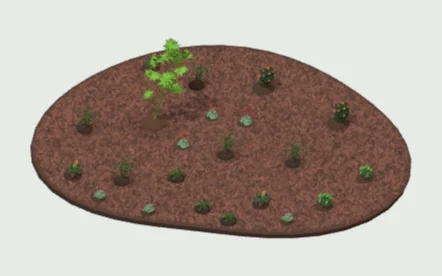
In this layout
9 products · 23 items
Select a product to highlight its items in 3D.
Plant choices
- Vine maple, 6 ft
- USDA zones 6-9 · Part shade · Moderate water once established · Flowers: spring (small red-white flowers)
- Evergreen huckleberry, #2 pot
- USDA zones 7-9 · Part shade · Moderate water once established · Flowers: spring
- Western sword fern, #2 pot
- USDA zones 5-9 · Full shade · Moderate water once established
- Salal, #1 pot
- USDA zones 6-8 · Part shade · Low water once established · Flowers: late spring to early summer
- Dull Oregon grape, #1 pot
- USDA zones 6-9 · Full shade · Low water once established · Flowers: spring
- Deer fern, #1 pot
- USDA zones 5-9 · Full shade · High water once established
- Pacific bleeding heart, #1 pot
- USDA zones 4-9 · Part shade · Moderate water once established · Flowers: spring to early summer
- Western red columbine, #1 pot
- USDA zones 4-9 · Part shade · Moderate water once established · Flowers: late spring to early summer
Growing zones describe winter cold. A matching zone is a useful starting point. Sun, soil and water matter too.
Product information
9 products
From each product’s own information, shown once however many are used.
New garden bed, prepared and mulched16.54 m²
Care
First weeks
This prepared bed is soil finished with bark mulch; plants/edging are separate. Check grades and leave existing crowns, root flares and house clearances open. Pull mulch aside before planting and set each plant at its proper soil level, not into mulch.
Ongoing
Keep mulch in the bed, remove confirmed small weeds and check soil moisture below before watering. Do not dig woody material into roots to tidy it: this is surface cover, not fertilizer or potting mix. Irrigation must reach soil; damp mulch does not prove roots received water.
Seasons
After storms, rake displaced surface material back without burying crowns or drains. Measure what remains before topping up; repeating the full quoted depth builds a mound. Replace only thinning/decomposed coverage with planned material, maintaining plant/building clearances.
What's normal
Fading, settling, decomposition, fungi and variable bark/chip texture are expected. These alone are not defects. Weeding remains necessary, especially for established perennial weeds; mulch does not make a bed weed-free. Keep new weed seedlings from rooting deeply in decomposing material.
When to call
Call for washout, sour saturated material, ponding, buried crowns or plant decline. Check moisture/drainage before fertilizer or pesticide. Keep children/pets from eating fungi/unfamiliar material, and do not assume visible mushrooms require chemicals.
Confirm
Confirm soil blend/depth, bark layer, drainage and future planting plan. Plants added later need their own care; an empty prepared bed does not require automatic plant irrigation/fertilizer. Avoid changing grades near building drainage or tree roots without the installer's assessment.
Vine maple, 6 ftAcer circinatum1
Care
First weeks
Check the original rootball and nearby soil several centimetres down, especially in warm or windy weather. Rain or damp mulch can hide dry roots. Water slowly at soil level when it is drying, soaking the roots and surrounding soil, then allow drainage. Adjust to weather, drainage and current local watering rules; never leave roots standing in water. Young vine maple needs moisture through its first dry summers, particularly in sun. Check ties if used on the multi-stemmed plant.
Ongoing
Keep loose organic mulch over the roots, clear of stems and crowns, and hand weed without damaging shallow roots. Provide partial shade or a suitable cool sunny site, humus-rich draining soil and protection from intense dry heat. Established plants may tolerate some seasonal dryness in shade but can still need water in drought; sunnier positions need closer monitoring.
Seasons
Preserve its layered, arching form. Remove only dead, rubbing or obstructive small branches; have larger structural cuts planned by an arborist in a locally suitable window outside heavy spring sap flow. Do not top it or force the natural multi-stemmed habit into a narrow column. Keep roots free from excavation and compaction.
What's normal
Fall colour and winter bare stems are normal. Arching stems may lean toward light; a woodland form can be wide and irregular. Leaf scorch in a hot summer can reflect exposure or drought rather than an infectious problem.
When to call
Call for sudden one-sided wilt, spreading black stems, large splits or roots rocking in the soil. Persistent scorch despite adequate moisture warrants a site review; extra water cannot correct severe reflected heat or poor drainage.
Confirm
Confirm the installed variety, local winter suitability, drainage, irrigation settings and the installer's establishment plan at handover. Confirm Acer circinatum, canopy clearance, summer shade and a stake-removal review. The listing's 'first two years' is an establishment estimate, not a date after which all sites stop needing drought care.
Evergreen huckleberry, #2 potVaccinium ovatum2
Care
First weeks
Check the original rootball and nearby soil several centimetres below the surface, especially in warm or windy weather; rain or a wet surface can hide a dry rootball. Water slowly at soil level when it is drying, soaking the roots and surrounding soil, then allow drainage. Adjust to actual moisture and local watering rules; never leave roots standing in water. Evergreen huckleberry establishes slowly and needs moisture while roots develop, even if older plants nearby survive dry summers.
Ongoing
Keep a loose mulch over the root area, clear of stems, and weed by hand rather than digging through shallow roots. Maintain acidic, well-drained soil in sun to part shade, with summer shade in hot exposures. Avoid lime and excessive feeding. An established plant can cope with some dryness, but monitor leaf condition and soil during prolonged drought.
Seasons
Prune lightly after flowering only where shape or clearance requires it; frequent clipping removes flowers and potential berries. Leave healthy natural shoots, removing dead or crossing growth selectively. Refresh loose organic mulch and reassess irrigation as seasons change.
What's normal
Reddish new shoots mature to glossy green. Slow early growth and variable berry crops are normal; shade often gives taller, looser growth. A few old leaves drop even though the shrub remains evergreen.
When to call
Ask for diagnosis of persistent pale leaves, blackened stems or progressive wilt. Check acidity and drainage before fertilizer. Only pick berries after positive identification and confirmation of treatment/harvest restrictions; do not infer other landscape berries are edible.
Confirm
Confirm the installed variety, local winter suitability, soil drainage, irrigation settings and the installer's establishment plan at handover. Confirm the installed species, soil acidity, mature size in this light level and whether fruit production or ornamental form is the priority. Ensure surrounding tree roots do not take all irrigation.
Western sword fern, #2 potPolystichum munitum5
Care
First weeks
Check the original rootball and nearby soil several centimetres down, especially in warm or windy weather. Rain or damp mulch can hide dry roots. Water slowly at soil level when it is drying, soaking the roots and surrounding soil, then allow drainage. Adjust to weather, drainage and current local watering rules; never leave roots standing in water. A newly planted sword fern needs regular checks even though a mature clump can tolerate dry shade. Tree roots and overhead cover can limit rainfall.
Ongoing
Keep loose organic mulch over the roots, clear of stems and crowns, and hand weed without damaging shallow roots. Provide partial/full shade and humus-rich, well-drained soil. Mature plants tolerate some dryness, but water through prolonged drought if fronds and root moisture indicate need. Avoid burying the crown, constantly saturated soil or sudden exposure to hot afternoon sun.
Seasons
Remove old brown or damaged fronds selectively in late winter/early spring before new fiddleheads expand. Cut near the base without damaging the central crown or emerging shoots; full annual removal of healthy foliage is not required. Keep leaf litter loose so it does not smother new growth.
What's normal
Brown spore patches in orderly rows beneath fronds are normal reproductive structures. A few older fronds naturally brown; new upright fronds gradually arch outward. Growth and ultimate size depend on site moisture and shade.
When to call
Call for a soft or rotten crown, sudden collapse of all fronds or repeated failure of new shoots. Some old frond damage after wind or cold is cosmetic. Check dry tree-root competition and drainage before simply watering more.
Confirm
Confirm the installed variety, local winter suitability, drainage, irrigation settings and the installer's establishment plan at handover. Confirm Polystichum munitum, summer shade, mature clearance and who will remove old fronds. A #2 pot describes nursery size; it does not mean the plant is already established or can immediately tolerate dry shade.
Salal, #1 potGaultheria shallon2
Care
First weeks
Check the original rootball and nearby soil several centimetres down, especially in warm or windy weather. Rain or damp mulch can hide dry roots. Water slowly at soil level when it is drying, soaking the roots and surrounding soil, then allow drainage. Adjust to weather, drainage and current local watering rules; never leave roots standing in water. Salal can establish slowly. Even under shade, a small nursery rootball can dry while older nearby shrubs appear healthy.
Ongoing
Keep loose organic mulch over the roots, clear of stems and crowns, and hand weed without damaging shallow roots. Provide shade/part shade and an acidic, humus-rich, draining root zone. Established plants tolerate dry shade, but a new planting or prolonged drought may need extra water. Avoid liming, frequent feeding and root disturbance under trees.
Seasons
Remove dead or damaged shoots selectively. If clearance is needed, prune lightly after flowering and manage unwanted spreading shoots at the edge. Do not repeatedly scalp a young planting; allow roots to develop. Replenish mulch without burying stems and check summer moisture beneath dense leaves.
What's normal
A slow start followed by spreading rhizomes and colonies is normal. New reddish growth, small urn-shaped flowers and dark late-season berries are seasonal features. A few old spotted leaves may fall while the shrub remains evergreen.
When to call
Call for expanding bare patches, widespread blackened stems or continued wilting after root moisture and drainage are checked. Avoid treating all leaf spots as a serious disease. Do not harvest berries until identity and any treatment/harvest restrictions are confirmed.
Confirm
Confirm the installed variety, local winter suitability, drainage, irrigation settings and the installer's establishment plan at handover. Confirm Gaultheria shallon, the desired colony boundary and how irrigation penetrates tree-root competition. Mature size varies with exposure, so leave room for taller growth in favourable shaded conditions.
Dull Oregon grape, #1 potMahonia nervosa3
Care
First weeks
Check the original rootball and nearby soil several centimetres below the surface, especially in warm or windy weather; rain or a wet surface can hide a dry rootball. Water slowly at soil level when it is drying, soaking the roots and surrounding soil, then allow drainage. Adjust to actual moisture and local watering rules; never leave roots standing in water. New dull Oregon grape still needs establishment water, especially beneath trees where rainfall may not reach the rootball.
Ongoing
Keep a loose mulch over the root area, clear of stems, and weed by hand rather than digging through shallow roots. It suits sheltered woodland shade and well-drained soil; mature plants tolerate dry shade better than newly planted ones. Give occasional supplemental water in prolonged drought if needed. Keep spiny leaves clear of narrow paths and work with gloves.
Seasons
Little pruning is needed. After flowering, remove damaged stems or selectively shorten awkward shoots, retaining the low layered form. Control spreading rhizomes or unwanted shoots at bed edges. Avoid repeated hedge shearing and digging through an established groundcover colony.
What's normal
Bronze or reddish winter foliage, upright yellow spring flowers and a slow initial spread are normal. This species is lower and slower than tall Oregon grape; it should not be judged by the taller shrub's growth.
When to call
Call for spreading stem death, all-new leaves yellowing or persistent wilt after moisture has been checked. Some old spotted leaves may be cosmetic; ask for diagnosis before replacing plants or applying products. Do not treat berries as a general edible-food recommendation.
Confirm
Confirm the installed variety, local winter suitability, soil drainage, irrigation settings and the installer's establishment plan at handover. Confirm that Mahonia nervosa, rather than the taller M. aquifolium, was supplied and agree the eventual colony edge. Maintain access for hand weeding until it fills in.
Deer fern, #1 potBlechnum spicant3
Care
First weeks
Check the original rootball and nearby soil several centimetres below the surface, especially in warm or windy weather; rain or a wet surface can hide a dry rootball. Water slowly at soil level when it is drying, soaking the roots and surrounding soil, then allow drainage. Adjust to actual moisture and local watering rules; never leave roots standing in water. Deer fern needs a reliably moist root zone while it establishes; shade beneath trees can be very dry even after rain.
Ongoing
Keep a loose mulch over the root area, clear of stems, and weed by hand rather than digging through shallow roots. Keep in sheltered shade or part shade, with humus-rich, moist but draining soil. Do not let the small rootball bake dry, and do not fill the crown with mulch or compost. Established deer fern usually needs more moisture than drought-tolerant sword fern.
Seasons
Remove only brown, damaged fronds close to the base before spring growth expands. Avoid cutting emerging curled fronds or shearing off all living leaves. Reassess moisture during dry summers and after changes to overhead tree cover; reduce irrigation when winter rainfall keeps roots moist.
What's normal
Low spreading sterile fronds and narrower upright fertile fronds have different shapes. Brown spore structures beneath fertile fronds are reproductive features, not pests. A few old fronds naturally age.
When to call
Ask for help if the crown becomes soft, all fronds suddenly wilt or new growth repeatedly scorches. Inspect soil before watering: dry shade and oxygen-starved wet soil can both cause decline.
Confirm
Confirm the installed variety, local winter suitability, soil drainage, irrigation settings and the installer's establishment plan at handover. Confirm shade through summer, competition from tree roots and how irrigation reaches the fern rather than only the surface mulch. Do not assume the existing 'high water' tag means saturated ground.
Pacific bleeding heart, #1 potDicentra formosa3
Care
First weeks
Check the original rootball and nearby soil several centimetres down, especially during warm or windy weather. Rain or damp mulch can conceal dry roots. Water slowly at soil level when it is drying, soaking the roots and surrounding soil, then allow drainage. Adjust to weather, drainage and current local watering rules; do not leave roots standing in water. Pacific bleeding heart needs moisture as it establishes in a shaded bed; soil under tree cover can be drier than rainfall suggests.
Ongoing
Keep loose mulch over the roots, clear of stems and crowns, and hand weed without digging into shallow roots. Grow in partial shade and humus-rich, moist but draining soil. Allow space for rhizomes to spread, and do not dig repeatedly through the colony. Established plants can rest during summer dryness; irrigation should follow actual soil conditions and the intended woodland planting plan.
Seasons
Remove spent stems or dead leaves selectively; do not cut healthy foliage merely because flowering has finished. Let fading leaves return energy to the roots. Divide or move only as needed during a suitable cool dormant/early-growth period. Keep dormant positions marked to avoid accidental excavation.
What's normal
Ferny foliage can yellow and disappear in hot or dry summer weather, then return with cooler conditions or the next spring. Winter dormancy and a spreading colony are normal; a temporarily empty patch is not proof the plant died.
When to call
Call for a rotting crown, repeated failure to reappear in the growing season or sudden collapse when soil and weather do not explain it. All parts are harmful if eaten and sap can irritate skin; wear gloves and keep prunings away from children and pets.
Confirm
Confirm the installed variety, local winter suitability, drainage, irrigation settings and the installer's establishment plan at handover. Confirm the native Dicentra formosa, acceptable spread and whether summer dormancy is intended in this planting. Do not keep adding water to force foliage if roots are already wet.
Western red columbine, #1 potAquilegia formosa3
Care
First weeks
Check the original rootball and nearby soil several centimetres down, especially in warm or windy weather. Rain or damp mulch can hide dry roots. Water slowly at soil level when it is drying, soaking the roots and surrounding soil, then allow drainage. Adjust to weather, drainage and current local watering rules; never leave roots standing in water. Young western columbine needs moisture while it roots into the bed; keep the small crown visible rather than buried in mulch.
Ongoing
Keep loose organic mulch over the roots, clear of stems and crowns, and hand weed without damaging shallow roots. Provide partial shade or a cool sunny position with moist but draining soil. Summer water may extend foliage and flowering, but avoid stagnant crowns or frequent overhead soaking. Leave room for self-seeded plants if a natural woodland colony is intended.
Seasons
After flowering, retain some seed heads for renewal or cut spent stems before seed ripens if spread is unwanted. Leave healthy basal foliage. Clear dead leaves in late winter/early spring without disturbing dormant crowns; divide only if necessary, since seedlings are often the easier way to renew short-lived plants.
What's normal
A plant may be relatively short-lived while its seedlings continue the display. Winter dormancy, some summer leaf decline and narrow pale leaf-miner trails can occur; limited leaf mining is usually cosmetic.
When to call
Call for complete repeated defoliation, a rotten crown or failure of both plants and seedlings to return under suitable conditions. All plant parts should be kept from ingestion, especially seeds; wear gloves if sensitive and keep clippings from children and pets.
Confirm
Confirm the installed variety, local winter suitability, drainage, irrigation settings and the installer's establishment plan at handover. Confirm Aquilegia formosa and acceptable seeding. Seedlings may vary where other columbines grow nearby. Agree whether the bed will be allowed to naturalize and avoid weeding out marked young plants.